

Plagiocephaly in Infants: Causes, Signs, Risks & Gentle Treatment Options
Plagiocephaly in Infants (Flat Head Syndrome)

What Is It?
Since the 1990s, more babies have developed flat spots on their heads (Plagiocephaly) due to back-sleeping, a safe sleep recommendation that greatly reduced SIDS risk.
However, this leads to flat spots developing on a baby’s head. Back to sleep reduced SIDS by 40% but increased Plagiocephaly by 600%, and it is increasing every year. (Jung and Sung, 2020)
While many assume flat head syndrome will resolve on its own, research shows it may be linked to delays in motor, language, and cognitive development. (Kim et al., 2020)
If left untreated, it may also lead to:
- Visible head shape differences affecting self-esteem
- Neck, jaw, and spinal strain that may cause headaches, jaw issues, or poor posture
- Higher risk of bullying due to appearance
Early assessment and gentle care can support your baby’s healthy growth.
Why Does it Occur

Birth can place strain on a baby’s soft head and neck.
In the first weeks, some babies develop a flat spot (Plagiocephaly) due to pressure or muscle imbalance.
Common causes include:
- Tight womb positioning (e.g. breech, twins)
- Forceps or vacuum-assisted delivery
- Too much time lying on the back or in baby gear (specify what baby gear- I.e. car capsules?)
Early signs are easy to miss, spotting them early helps support healthy head shape and development.
What To Look For
If you notice any of the following, it may be time to seek a professional assessment:
- Baby always looking or turning to one side
- Flat spot on the back or side of the head (often with less hair)
- Uneven facial features or cheek asymmetry
- Misaligned or uneven ears
These signs can be subtle, but early support can make a big difference.
How Can Chiropractic Help
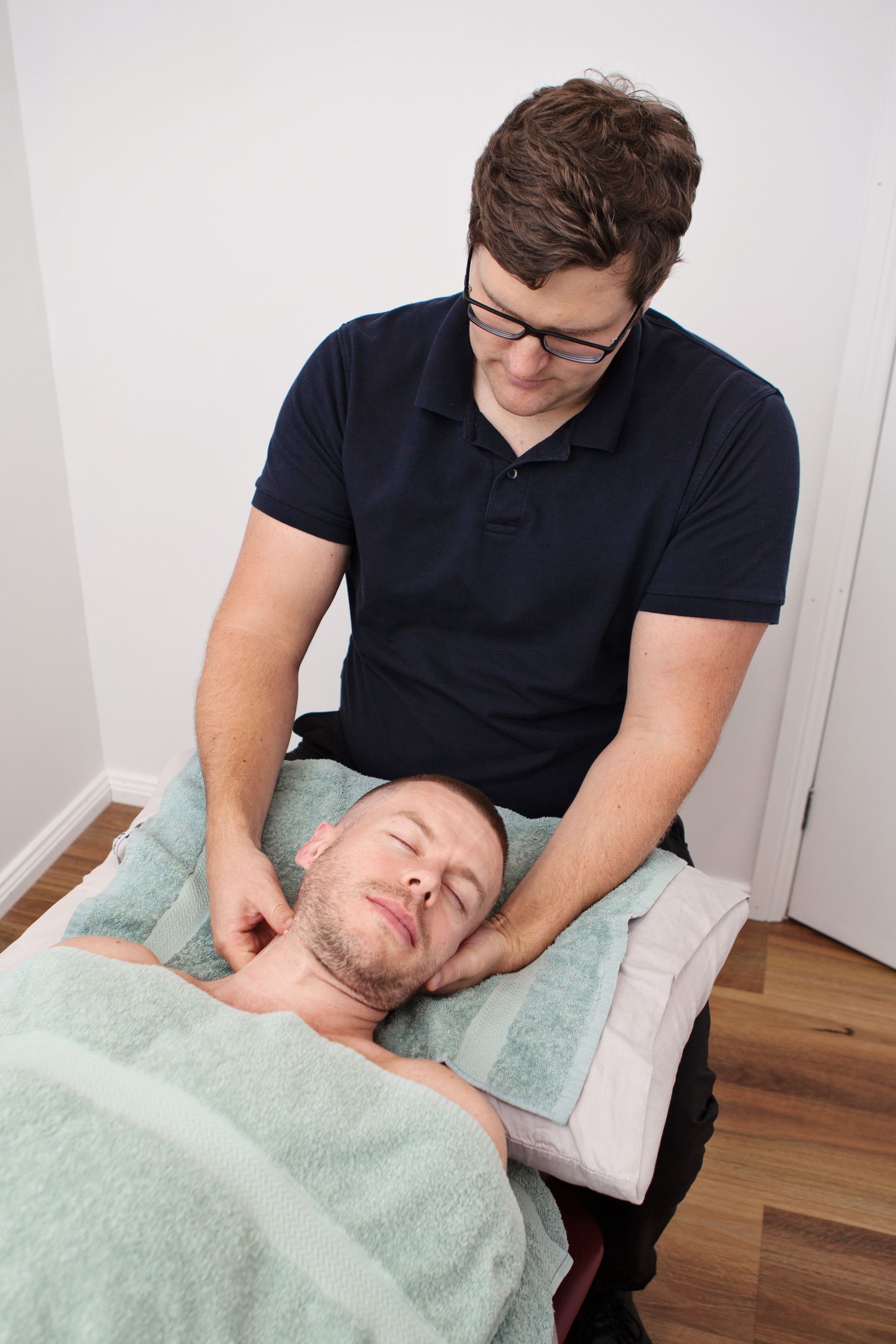
Paediatric trained chiropractors can assess your baby’s head shape using gentle measurements and a flat-head index.
A full-body check from neck to tailbone, helps find any tension or imbalances affecting head shape.
Care is gentle, safe, and baby-friendly, using light-touch techniques to:
- Improve neck and spine mobility
- Support even head movement
- Release tension in the head and body
Early care can support healthy development and more comfortable movement.
Chiropractic care supports your baby’s development, but home care matters too.
For best results, we combine gentle in-clinic treatment with simple exercises at home. Together, these help improve movement, comfort, and head shape as your baby grows.
Home Care

Tummy Time:
Aim for several short sessions each day (e.g. during nappy changes), along with 1–2 longer stretches. This helps strengthen muscles and prevent flat spots on the head.
Vary Head Position:
Encourage your baby to turn their head both ways by using toys or gentle repositioning during play or rest.
Ball Rocking:
Gently rock your baby on their tummy over an exercise ball for 1–2 minutes, twice daily. It’s a fun way to build strength and coordination.
Gentle Stretches:
A
Paediatric Chiropractor can guide you through safe, effective stretches to support your baby’s development and comfort.
Ask Our Helpful Chiropractors
Call us on (08) 7222 8701
or Book Online
References
1. Jung, B.K. and Yun, I.S. (2020) ‘Diagnosis and treatment of positional plagiocephaly’, Archives of Craniofacial Surgery, 21(2), pp. 80–86. doi:10.7181/acfs.2020.00059.
2. Kim E-H, Kim KE, Jeon J, Sheen YH, Lee H-S, Yoon SY, Kim NH and Choi KM (2020) Delayed Motor Development and Infant Obesity as Risk Factors for Severe Deformational Plagiocephaly: A Matched Case–Control Study. Front. Pediatr. 8:582360. doi: 10.3389/fped.2020.582360